
Uncle Ted's Cabin
Reflections on Surrogate Activities and the Abolition of Man

I. The Prophet in the Shack
His cabin was a tomb for a civilization he had buried in his mind.
In 1995, Industrial Society and Its Future entered the American bloodstream like a virus. Typed from a remote Montana cabin and mailed to newspapers under threat of continued bloodshed, the manifesto struck its readers with the strange combination of revulsion and recognition. It was written by a killer, but not by a madman.
Its author, Ted Kaczynski, offered a theory of technological society that sidestepped both leftist utopianism and right-wing market worship. His concern was not environmental collapse or economic inequality, but a subtler form of psychic mutilation. The modern world, he claimed, had robbed man of meaning. It offered him safety in exchange for dignity, distraction in exchange for achievement. And the worst part was that man accepted.
There is no need to venerate the man to acknowledge the accuracy of his diagnosis. Kaczynski was precise in describing what the digital age would become. He foresaw the fragmentation of identity, the spread of performative politics, the exhaustion of people who are simultaneously overstimulated and unfulfilled. He grasped that abundance does not liberate—it overloads. That freedom without necessity produces not joy but weightlessness. His was not the first voice to say this. But it was among the last to say it with clarity, before the internet swallowed clarity whole.
In an age that now manufactures identity on command, the loner in the woods saw something we refused to: that man withers in captivity, even when the bars are soft and padded. Kaczynski did not write a warning. He wrote an obituary.
II. The Invention of the Surrogate
When real struggle vanished, we settled for simulations with prize tickets.
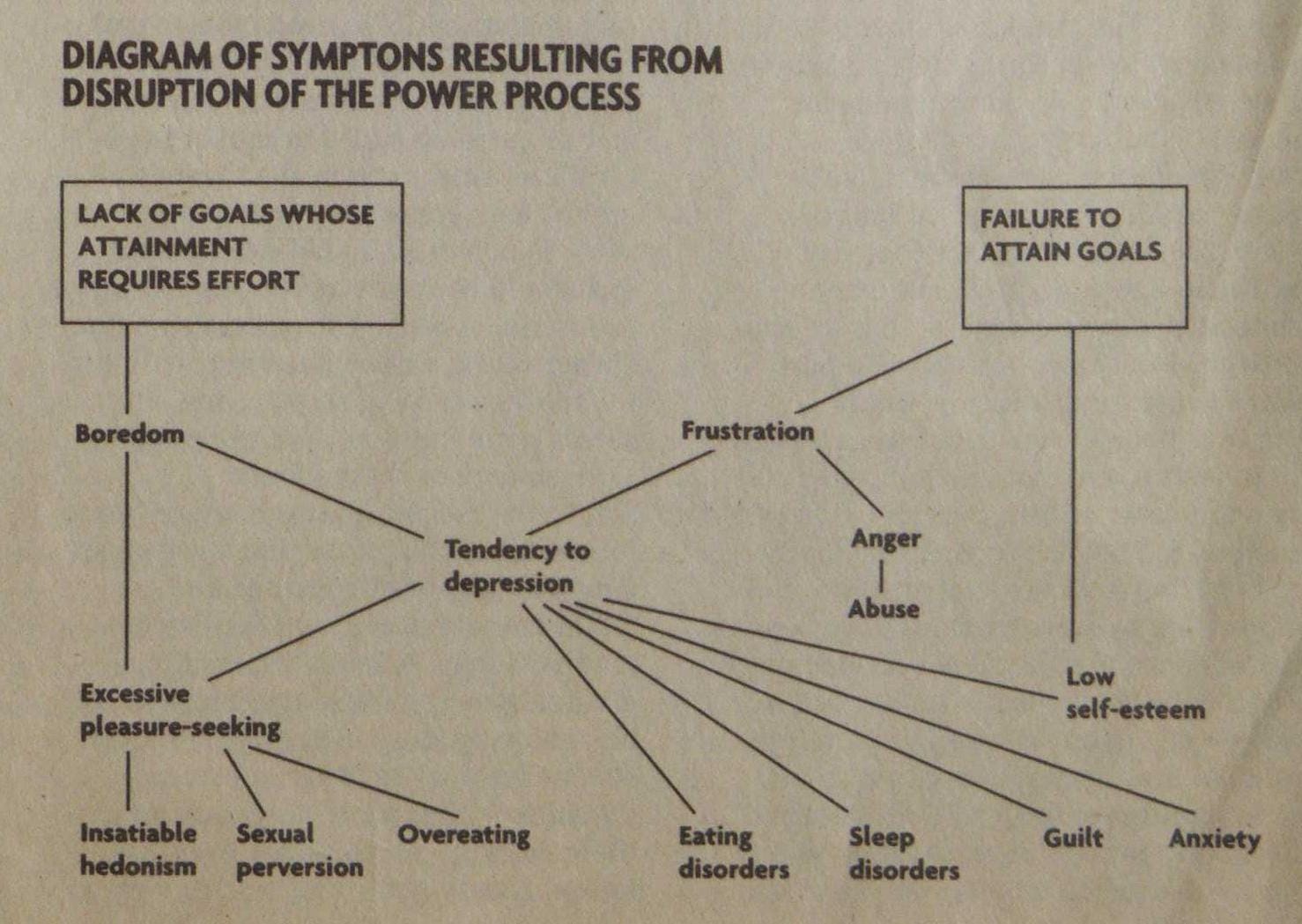
Kaczynski’s most enduring idea is that of the surrogate activity. It is simple, brutal, and true. When men are denied meaningful struggle, they invent substitutes for it. They direct their will toward trivial goals to mimic the structure of purpose. These become the scaffolds of modern life.
In primitive societies, effort is bound to survival. You hunt or you starve. You build or you freeze. In the industrial world, necessity dissolves. Machines do the work. Comfort replaces danger. And yet the human need for challenge remains. So man fabricates it. He collects stamps, trains for marathons, debates strangers online, writes dissertations about nothing. These acts imitate the shape of struggle while avoiding its stakes.
The tragedy of the surrogate is not that it is false, but that it satisfies enough to prevent revolt. It grants the illusion of agency. It drains excess vitality into harmless outlets. The factory worker finds meaning in a bowling league. The intellectual finds it in academic politics. Both serve the same purpose: to keep the engine running quietly.
Kaczynski was right to see this as a structural feature, not a cultural accident. The system requires it. A society that has mechanized necessity must mechanize purpose as well. Without surrogate activities, the idle man would remember that he is a prisoner.
Modernity sustains itself on the management of leisure. The idle mind, once the breeding ground of poetry and philosophy, now busies itself with hobbies designed by committees. The freedom we celebrate is carefully curated captivity.
III. The Error of Contempt
Kaczynski mistook play for decay because he had forgotten joy.
Kaczynski saw surrogate activities as symptoms of decay. He treated them as evidence that man had lost his primal vitality. To him, every artificial struggle was a humiliation. He believed that to live rightly, one must return to a life of necessity, where meaning arises from survival itself. Here he revealed both his genius and his sickness.
His critique was not wrong. It was incomplete. The surrogate activity is not the enemy. It is the evolutionary answer to abundance. Humanity cannot return to the cave without murdering its children. The factory and the circuit board are extensions of the hand. They cannot be amputated without killing the body.
The man in the cabin mistook a coping mechanism for a curse. He saw play and leisure as dilution, rather than as rehearsal for higher forms of life. But man’s capacity to play is what keeps him from despair. The act of simulation—of striving for imagined ends—trains the mind to strive at all. The artist painting a landscape is not deceived; he is practicing the art of vision.
Kaczynski’s contempt arose from his isolation. He saw humanity through the cracks of a boarded window. To him, every act of enjoyment looked like surrender. But play can be preparation. Hobby can be seed. In every model airplane and amateur garden lies the same spark that built civilization.
The error was moral, not intellectual. He understood the machine. He did not understand the man.
IV. The Democratization of Genius
The aristocracy of taste is now a question of bandwidth.
Technology has done what kings could not. It has taken the leisure of aristocrats and handed it to the common man.
Once, to write poetry or study the stars required servants and silence. To pursue sculpture, philosophy, or architecture meant noble birth or monastic retreat. Genius needed insulation from toil. Culture grew only where labor had been offloaded to others.
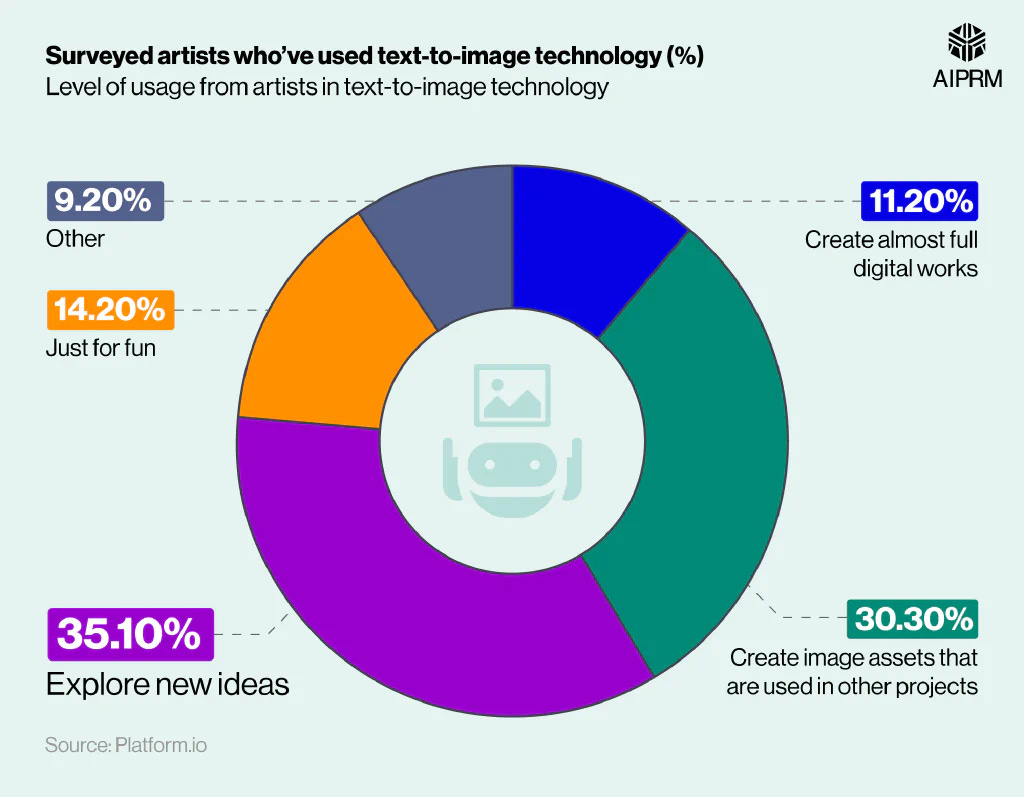
Now that insulation is widespread. The washing machine, the search engine, the word processor—each one is a liberation. The mechanic paints in oils after dinner. The cashier writes novels on weekends. What was once the province of the few is now the plaything of the many. These are not surrogate activities in the sense Kaczynski meant. They are better than struggle. They are what struggle was meant to produce.
A system that multiplies tools multiplies possibilities. It lowers the floor, yes, but it also raises the ceiling. The same screen that numbs the fool can awaken the prodigy. The same algorithm that feeds you garbage can lead you to wisdom. The medium is neutral. The use is not.
Kaczynski feared this flood. He mistook dilution for desecration. He thought that if everyone could paint, then painting would cease to matter. But civilization is not built on exclusion. It is built on surplus. We rise together or not at all.
When greatness is rare, it is protected. When greatness is common, it is fulfilled. Technology made this possible. The mass now owns the means of beauty. That is not decay. That is promise.
V. The Cabin as Confession
Reason picks the speed. Religion picks the direction.
Kaczynski’s rejection of technology was not a philosophical position. It was a personal refuge. His call for renunciation did not follow logically from his diagnosis. It followed emotionally from his condition.
He was brilliant, but maladapted. A man who could see the machine but not the dance. His retreat into the forest was not the act of a prophet—it was the retreat of one who had lost the social war and sought to rationalize defeat. The call to abandon modern life was less a prescription than a performance, staged to validate his isolation.
Had Kaczynski been born into a tribe that honored his peculiar genius, he might have become a saint or a scholar. Instead, he became an assassin of symbols. The bombs were not instruments of change. They were acts of personal revenge against a world that made no place for him.
This matters because it clouds the clarity of his thought. He did not propose reform. He demanded collapse. And collapse always begins with the self.
His hatred of surrogate activities reveals his fear that others might find peace in the world that tortured him. He would rather burn the machine than see it used to help the weak sing. He mistook healing for humiliation.
The manifesto reads, at times, like a blueprint. But the cabin reveals the truth. It was a cell. The world outside had grown too wide for him. And so he declared that width itself was a sin.
VI. The Tools of Ascent
We have the means of production; now we need the means of refinement.
A better man would have asked a better question: not how do we destroy the machine, but how do we use it well?
Technology has placed power in the hands of those who once had none. This is a dangerous gift. Without direction, it leads to noise. But with structure, it can elevate. The challenge is not technological. It is pedagogical.
If modern man fritters away his days in fantasy, it is because he was never taught how to dream. If he scrolls, posts, and pings without purpose, it is because no one showed him how to aim. The machine did not steal his soul. It revealed that he had none prepared.
What is needed is not renunciation but cultivation. The surplus of time and access demands a new form of education—one that teaches taste, judgment, and restraint. One that trains the common man in the habits once reserved for nobles. Not as ornament, but as survival.
This is not idealism. It is necessity. A society that distributes power must distribute wisdom. Otherwise, it creates a class of overfed children with nuclear toys. And the first casualty is meaning.
The task is civilizational. Equip the masses with the faculty to choose well. Teach them what is noble. Train them in the uses of abundance. If the structure of society encourages surrogate activity, then let those surrogates lift, not lull.
The machine is a chisel. In a brute’s hand, it gouges. In a sculptor’s, it frees the form.
VII. The Fulfillment of the Prophecy
The scroll replaced the bomb as the instrument of collapse.
In the decades since Kaczynski’s imprisonment, his prophecies have ripened. The world did not disprove his thesis. It confirmed it with a thousand scrolls and swipes.
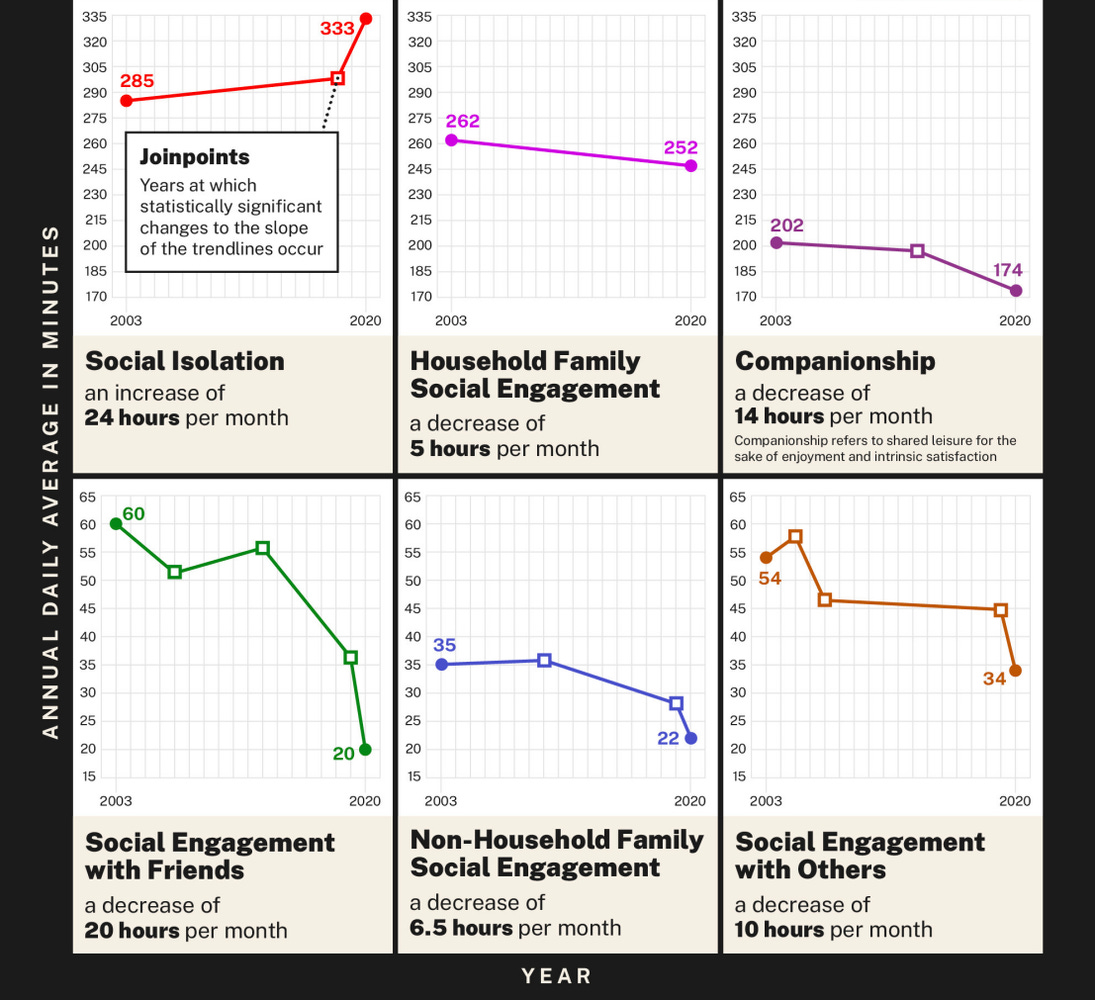
The internet did not make us wise. It made us distracted. Social media did not connect us. It curated performance and called it identity. Digital life did not expand the soul. It split it across screens.
Surrogate activities have become the global norm. We livestream our hobbies, gamify our workouts, compete in comment sections. Every idle hour is filled, every instinct monetized. Leisure has become labor with metrics. The simulation of purpose is now indistinguishable from purpose itself.
But where Kaczynski saw poison, we must see potential. The prevalence of surrogate activity reveals not decay, but hunger. It proves that people still long to strive, still need structure, still ache for ascent. The body is dull, but the spirit writhes. That is not a death rattle. It is a signal.
The question is no longer was he right. He was. The question is what should we build now that we know?
To answer, we must stop worshipping either collapse or complacency. The two are twins. Both reject responsibility. One flees forward into chaos. The other drifts downward into apathy.
There is a third path: shaping the surrogate. Giving form to frivolity. Elevating play into craft, hobby into discipline, simulation into sacrament.
Kaczynski revealed the problem. His mistake was despair. Ours would be imitation.
VIII. Climbing the Pyramid
The machine gives you food. Meaning is your job.
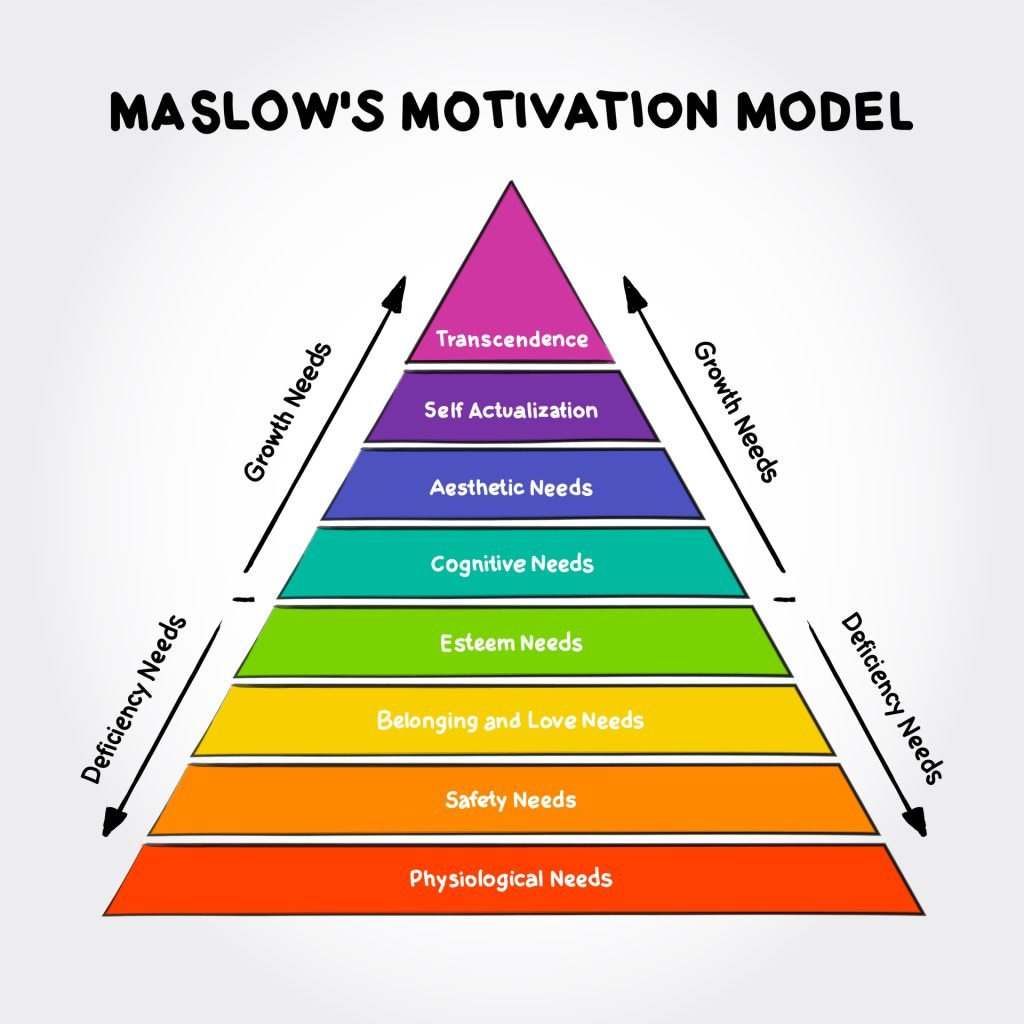
The structure of human desire is not chaos. It has order. And its name is Maslow.
At the base: food, safety, shelter. Above that: belonging, esteem, self-actualization. A hierarchy, not of morality, but of urgency. Technology excels at the lower levels. It feeds, shelters, protects. It multiplies convenience. But it does not complete us. Because meaning does not sit at the bottom.
Kaczynski recognized that the foundations had grown fat. He feared that the upper tiers would rot. But he misread the sequence. Security is not decadence. It is prelude. The problem is not that we have met our basic needs. It is that we stopped climbing once we did.
Technology makes ascent possible, but it does not guarantee it. You can use the internet to learn ancient Greek or to watch pornography. You can write epics or click endlessly through memes. The platform is agnostic. It conforms to the user. It reveals his level on the pyramid, not his capacity to climb.
What’s required is intentionality. A ladder does not lift the man. The man lifts himself.
Our task is not to return to scarcity. It is to aim surplus upward. To reframe abundance as obligation. The mind fed by machines must be taught to hunger for something more. The tools that serve the body must be repurposed to train the soul.
Maslow’s hierarchy is not a list. It is a path. And in the age of digital plenitude, every man must choose: to climb or to circle. To ascend or to rot in place.
IX. Noble Substitutes
The hobby is the altar of the unformed soul.
If surrogate activities are inevitable, then they must be shaped. Not censored. Not mocked. Refined.
The modern world cannot return to necessity. It is engineered for surplus. In this condition, the only way forward is to ennoble the artificial. To make the substitute worthy of the desire it mimics. A pastime becomes a practice. A hobby becomes a craft. A game becomes a form of preparation.
We already see this impulse in fragments. The online woodworker revives an ancestral instinct. The amateur historian rebuilds cultural memory. The digital musician reaches across continents. These are not escapes. They are new expressions of old drives, made accessible by machines. They do not imitate life—they extend it.
What distinguishes noble surrogates from their lesser cousins is structure. Meaning requires limitation. Without it, activity becomes entertainment. With it, activity becomes training.
This is why frivolity fails. It offers stimulation without refinement. But when constraint is introduced—when rules appear, when judgment is allowed, when mastery is required—the surrogate begins to transform. It becomes serious. And the person becomes more than entertained. He becomes formed.
Technology can help. Algorithms can be tuned for elevation, not addiction. Platforms can reward creation, not confession. Tools can be built to teach taste, rather than harvest time.
The future will not be post-technological. But it can be post-frivolous.
And when our substitutes no longer flatter the worst in us but shape the best, the term “surrogate” will no longer be a diagnosis. It will be a method.
X. The End of Malaise
The end of history was the start of distraction.
A man cannot live by warning alone. He must be offered a direction.
Kaczynski sounded the alarm. But alarms must be followed by architecture. The goal is not to exit the machine. It is to give it purpose. The error of modernity was not in building too much—but in building without aim.
When surrogate activities are refined, they cease to be distractions. They become instruments of ascent. Technology, once a captor of attention, becomes a conductor of meaning. The structure of purpose returns—not imposed from without, but cultivated from within.
Frivolity ends when we name the mountain. When the tools serve an upward motion. When our games are no longer habits of escape but rehearsals for greatness. When the machine no longer pulls man downward into comfort but drives him upward into wonder.
This requires more than critique. It requires leadership. The cathedral must be imagined before it can be built. And someone must teach the builders what to love.
The modern malaise—aimlessness, resentment, decay—has always been a hunger in disguise. A hunger for form. A hunger for discipline. A hunger for beauty. These cannot be programmed. But they can be pursued. And technology, rightly used, can make that pursuit available to all.
Meaning does not return with violence. It returns with vision. It returns when the man with tools remembers that he was meant to shape, not drift.
The cabin is not the future. The forge is. We have the steel. It waits only for the hand.
As someone who has read industrial society and its future I appreciate this.