
Maslow's Hierarchy and a New Theory of Progress
Toward a Positive Vision for the Right

I. The False Religion of Change
To move forward is not necessarily to move upward.
In the modern age, the Left has elevated change into a creed. It is no longer treated as a condition of life but as a sacrament. Every alteration, no matter how trivial or destructive, is hailed as progress. The faith is simple: what is new must be better, what is old must be cast aside. It is the liturgy of those who lack memory, chanting that history bends in their favor while dismantling the very structures that gave them stability.
This belief thrives among the low-minded, who mistake novelty for greatness. They celebrate upheaval not because it yields improvement but because it distracts them from their emptiness. One sees it in the activist who topples statues without building monuments of his own, or the bureaucrat who imposes regulations that hollow out communities while claiming moral grandeur. Change becomes a mask for weakness, a way of cloaking impotence in the language of destiny.
Yet beneath the slogans, this cult of change reveals its true purpose: the laundering of destruction. A tradition is attacked, and the attackers cry progress. A community is broken, and they call it reform. The rhetoric provides cover for behaviors that would otherwise be seen as vandalism.
The irony is stark. A civilization that once measured greatness by its ability to endure now measures it by its ability to discard. By treating change as an end in itself, the Left has confused decay with progress. It is a faith that consumes its followers along with its enemies.
II. The Right’s Hollow Rebellion
In rejecting progress, the Right cedes it to its enemies.
If the Left clings to change as a false idol, the Right has settled for an empty rebellion. Lacking a vision of its own, it defines itself by negation. When the Left cries for change, the Right reflexively answers with resistance. Yet resistance without direction is no philosophy. It is inertia dressed in moral garb.
This habit has bred its own form of foolishness. Some have come to treat stagnancy as a virtue, mistaking the mere preservation of present conditions for wisdom. They praise stillness as though it were stability, forgetting that stability requires growth. In their hands, tradition becomes a museum piece, preserved under glass rather than lived and carried forward.
One can see this most clearly in the way the Right speaks about culture. Where the Left proclaims novelty as liberation, the Right often insists that nothing should change at all. But a refusal to move is not strength. It is a confession of weakness. A civilization that stops building begins to rot, and rot is no less destructive than reckless upheaval.
The tragedy is that this reaction plays into the Left’s hands. By opposing change in every form, the Right affirms the premise that progress belongs solely to its enemies. It concedes the higher ground and leaves itself to fight on the defensive. Without a vision of what progress ought to mean, the Right surrenders its ability to lead. It becomes an echo, speaking only in reply, and replies never shape destiny.
III. The Forgotten Possibility of Progress
Advancement is in ordered movement.
The word progress has been poisoned. To many it means only the upheavals of the twentieth century, the cultural destruction of recent decades, or the parade of technological toys that leave people more alienated than before. Yet progress itself is not the enemy. The mistake lies in how it has been defined and pursued.
Progress is possible, and it is desirable. It does not mean discarding everything inherited, nor does it mean clinging blindly to what already exists. True progress is the ordered movement of a people toward greater fulfillment, a steady ascent that answers to real human needs rather than the whims of ideologues. Without it, society stagnates. With it, civilization flourishes.
This requires clarity about the goal. Progress is not measured by novelty or preservation alone but by whether life grows richer in meaning and more secure in its foundations. A society that builds grander cathedrals, strengthens families, and provides peace for its members is advancing, even if its technologies are simple. A society that multiplies its gadgets while dissolving its bonds is regressing, no matter how many satellites it launches.
The Left has claimed the word progress by confusing it with movement, while the Right has abandoned it altogether, mistaking skepticism for wisdom. Both errors leave a void. That void must be filled with a higher vision. To reclaim progress is to recover the possibility of building again, to aim not at change for its own sake or at stillness, but at the rising satisfaction of human needs ordered toward greatness.
IV. Progress as Fulfilled Needs
Progress is the enrichment of life, not its disruption.
If progress is to be reclaimed, it must be defined in terms that resist corruption. The most direct measure is whether the real needs of people are being met. Not the passing desires of a restless age, but the enduring necessities that shape a meaningful human life.
Progress, then, can be understood as the increasing fulfillment of these needs for an increasing number of people. When more men and women can eat well, sleep in safety, find belonging in community, and ascend toward higher callings, society is advancing. When these things are eroded, no rhetoric of “change” or “reform” can disguise decline.
Technology enters this picture only secondarily. A discovery has value only to the extent that it strengthens this fulfillment. The steam engine was progress because it multiplied abundance, not because it was new. Vaccines were progress because they protected life, not because they were clever. The standard of judgment must always be whether a tool or system helps more people live more fully across the span of needs.
This way of speaking restores clarity. It prevents us from praising change that hollows life or condemning stability that enriches it. Progress is not chaos and it is not paralysis. It is the measured expansion of human flourishing. Without this grounding, societies will continue to mistake gadgets for greatness and confusion for vision. With it, they can orient their energy toward something lasting, a growth that honors the human being in all his dimensions.
V. Maslow’s Hierarchy Revisited
Progress looks like a line. But only from the side. From the front, it's a ladder.
To understand which needs must be fulfilled, we can turn to Abraham Maslow’s hierarchy. Though born of twentieth-century psychology, the framework still carries weight. It orders human needs from the most immediate to the most transcendent, showing that fulfillment is layered. Food and safety form the base. Belonging and esteem rise above them. At the summit stand meaning and transcendence.
This structure rescues us from confusion. A society that boasts of abstract ideals while leaving its people hungry is not advancing. Nor is a society that multiplies wealth while corroding family bonds. True progress is cumulative: lower needs must be secured if higher ones are to flourish. A nation without security cannot produce beauty, and a culture without belonging cannot sustain faith.
The hierarchy also reveals why our age feels hollow. Material abundance is at hand, yet higher needs remain unmet. Many live surrounded by luxuries while suffering isolation and purposelessness. By mistaking comfort for fulfillment, modern society has stalled on the lower rungs.
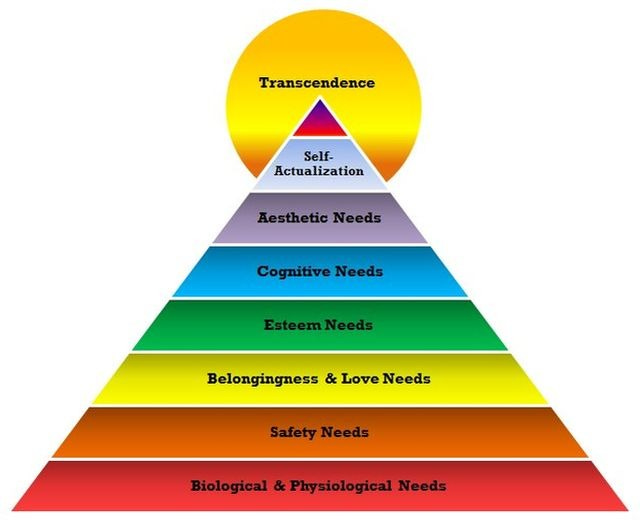
To reclaim progress, each level must be addressed in turn. The ascent is not optional. It is a map of human flourishing that cannot be evaded. The political movements that despise it—whether by idolizing material plenty or by scorning spiritual aspiration—leave their people incomplete. Progress worth defending is the steady upward movement through the hierarchy, so that the safety of the body, the unity of the community, and the majesty of the spirit are all bound together.
VI. The Condition of Cooperativity
Don’t feed the mouth that bites you.
Progress depends on more than individual striving. Needs are not fulfilled in isolation, but in community. A man can work tirelessly, yet without others to share the burden, his effort withers. Cooperativity is the condition by which true progress is measured and secured.
This principle is harsh in its clarity. When one group chooses to build together and another refuses, the builders advance. Those who refuse are left behind. In every age, there are those who despise the common good, demanding to be carried while offering nothing in return. They are anchors on the ascent. To prioritize them is to betray those willing to labor toward the higher rungs of life.
The logic is almost primitive in its simplicity. A man extends his hand in help. If the other grasps it, both rise. If the other spits in his face, he forfeits his place. Civilization has no obligation to carry saboteurs. Its duty is to those who cooperate in its work. Progress is never distributed evenly; it belongs to those who join the climb.
Here lies the unspoken truth: advancement is not universal. It is selective. Progress can only be shared among those who build it. To demand otherwise is to confuse charity with suicide. The future belongs to the communities that can trust one another enough to work together. Without this foundation, Maslow’s ladder becomes unreachable. With it, the climb becomes possible, and human life takes on its upward shape.
VII. Technology in Its Proper Place
Tools are bridges, not destinations.
Technology has long been mistaken for progress itself. The invention dazzles, the machine hums, and the crowd cheers as though the future had been secured. Yet the reality is simpler. Technology has no inherent worth apart from the needs it helps fulfill. It is a servant, not a master.
A new tool should be judged by its fruits. The printing press was progress because it spread knowledge. Antibiotics were progress because they preserved life. But what of the technologies that fragment families, addict the mind, and weaken the body? They are clever but hollow, marvels that corrode rather than enrich. To call them progress is to betray the very word.
This distinction matters because societies often mistake abundance of devices for abundance of life. The screen proliferates, but conversation dies. The algorithm sharpens, but imagination dulls. The measure must never be the sophistication of the tool, but the elevation of the person. When technology serves the hierarchy of needs, it has worth. When it undermines those needs, it becomes a parasite wearing the mask of advancement.
Properly understood, technology is a derivative good. Its value lies downstream from the greater goal of human flourishing. It is the bridge, not the destination. To enthrone it is to worship the means while forsaking the end. The future cannot be built on gadgets alone. It must be built on people, whose needs are fulfilled more completely because the tools they wield have been kept in their rightful place.
VIII. Change as a Servant, Not a Master
Movement without vision is collapse in slow motion.
Change is inevitable, but it is not inherently good. To treat it as sacred is to mistake turbulence for growth. Civilizations rise and fall, customs shift, and technologies emerge, but none of this guarantees advancement. Change is a current that must be steered, not a tide to be worshiped.
When directed toward fulfillment of needs, change is a blessing. The abolition of famine, the broadening of literacy, the cultivation of beauty in new forms—these are changes that elevate life. But change without order unravels rather than builds. The fall of Rome was also change. So was the disintegration of countless tribes and kingdoms that embraced novelty at the cost of continuity.
Our age has erred in confusing movement with improvement. A society that leaps from one experiment to the next, guided by impulse rather than purpose, burns itself out. The noise of constant upheaval conceals the hollowness beneath. Real progress requires the discipline to sift. Change must be tested against the hierarchy of needs. Does it bring greater security, belonging, and meaning? If not, it deserves rejection, no matter how fashionable or “inevitable” it seems.
Seen rightly, change is subordinate. It is the raw material of history, given form only by vision. Without direction, it dissolves foundations. With direction, it strengthens them. The task of a serious civilization is not to resist change entirely, nor to embrace it indiscriminately, but to harness it as a servant of ordered progress. Anything less is drift toward decay.
IX. Near Horizons: Security and Community
The locked door is a monument to lost trust.
If progress is measured by fulfilled needs, the immediate task is clear. Before talk of transcendence or beauty, a people must secure the foundations of life. Safety and belonging form the bedrock of Maslow’s ladder, and without them nothing higher can stand. The near horizon of progress is therefore community and security.
A community provides the bonds that answer the hunger for belonging. When neighbors know one another, when families remain intact, when trust is strong enough that doors need not be locked, life is richer. This richness cannot be replaced by wealth or substituted by technology. It is the first true step out of isolation. A man with friends and kin is stronger than a man with a thousand gadgets.
Security is the partner to community. Without it, even the closest ties strain under fear. Crime, disorder, and uncertainty corrode the spirit, dragging people back down the ladder. The right to walk freely, to sleep without fear, to raise children without the shadow of chaos—these are not luxuries. They are the precondition for everything higher.
Communities that take these tasks seriously gain momentum. They create enclaves of order in a chaotic age, places where trust grows and meaning takes root. This is where progress must begin: by rebuilding the smallest circles of human life until they can bear the weight of larger ones. To attempt higher aims while neglecting these foundations is folly. Without security and belonging, no civilization can ascend.
X. Distant Horizons: Beauty and Spirit
Beauty is the language eternity speaks to time.
When the foundations are secured, the higher purpose of progress comes into view. Man does not live for bread alone. Beyond safety, beyond community, he hungers for beauty and spirit. These are not ornaments added after survival but the crown of the hierarchy, the marks of a people who have moved beyond mere subsistence into greatness.
Beauty gives form to order. A city with safe streets but soulless buildings still falls short of true advancement. Cathedrals, gardens, music, and ritual bind generations into a shared vision that transcends the present. They remind a people that they are more than consumers or survivors. They are stewards of a heritage and participants in a destiny. Without beauty, even abundance grows stale.
Spirit crowns beauty by giving it direction. A civilization is highest when it sees its life as bound to something greater than itself. Faith, reverence, the pursuit of transcendence. These elevate human life beyond the horizon of material satisfaction. To fulfill this need is not to escape the world, but to sanctify it.
The distant horizon of progress is therefore not a utopia of gadgets or comforts. It is a people united in aesthetic and spiritual life, secure enough to rise above survival and bold enough to seek meaning. When communities ascend to this level, they no longer drift with the currents of change. They shape their course with clarity, binding survival to majesty, and time to eternity.
This is the summit toward which progress must climb.
“All is interests, we must not neglect our interests, all is a struggle for material things; but an inner voice tells us that we have lost something pure, elevated, and fragile. We have ceased to see the purpose." - Solzhenitsyn